How to Paint Walls and Trim the Same Color
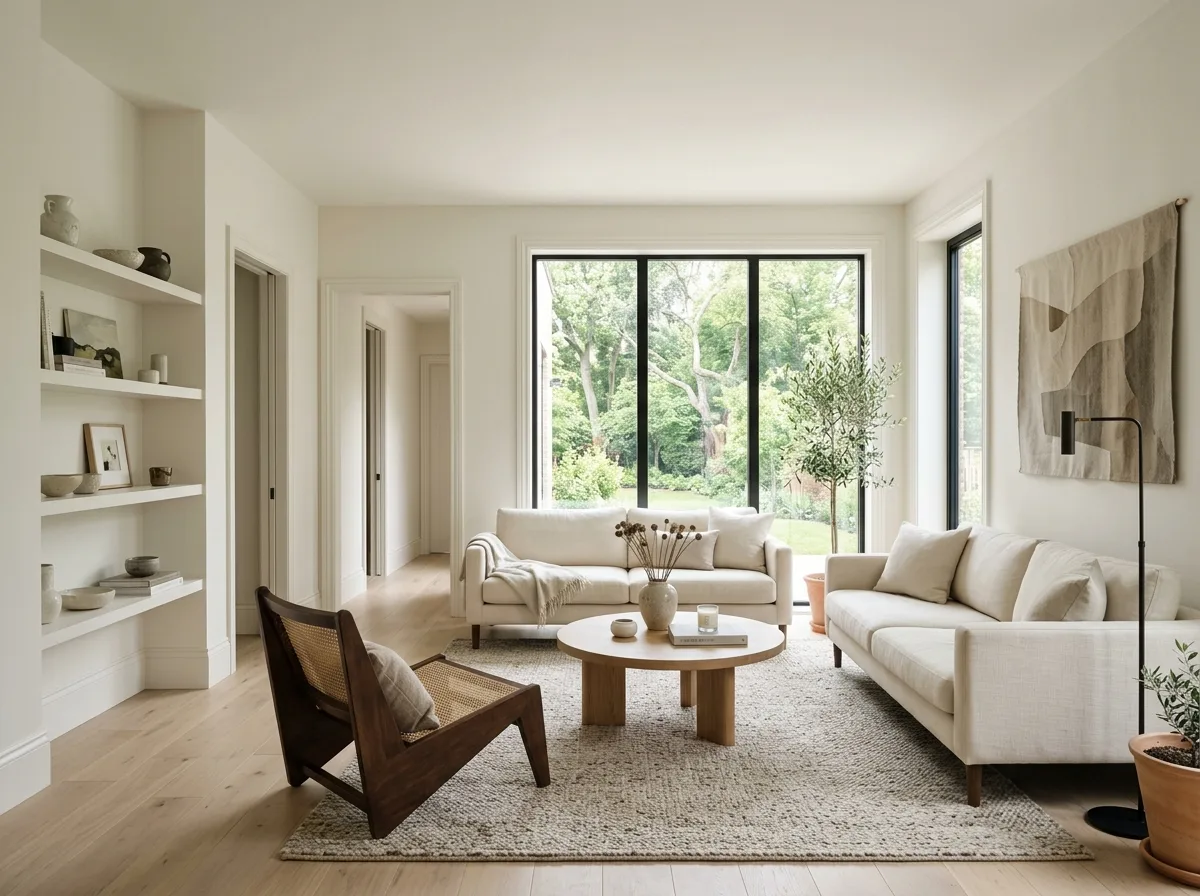
Painting walls and trim the same color is a current trend that gives a unified, finished look that suits small rooms, low-light spaces, and older homes with detailed millwork. To get this look, choose one color, buy it in two sheens, prep carefully, and paint the trim before rolling the walls.
For years the rule was simple: colored walls, white trim, a crisp line between them. More homeowners are now skipping that line entirely and running one color across walls, trim, and molding, and it’s easy to see why they like the result.
Key Takeaways
- Color drenching means painting the walls, trim, and molding all one color so the lines between surfaces disappear and the room feels bigger.
- Use one color in two sheens: flat on the walls, semi-gloss on the trim.
- Soft whites like White Dove and Swiss Coffee are the easiest starting point, while deeper colors like dark gray or green give the most dramatic version.
- The look does the most work in small rooms, low-light rooms, and older homes with crown molding or picture rail.
- Prep counts for more here than in a standard repaint, since one color shows every flaw.
- Paint one room before committing to the whole house to see how the color reads on your own walls, trim, and ceiling.
What Is Color Drenching?
Color drenching means painting the walls, trim, crown molding, and sometimes the ceiling and doors all the same color. “Monochromatic” means the same thing.
When every surface shares one color, the lines between them disappear. Rooms feel calmer and more open, even in small spaces.
Is This Look as Popular as It Seems?
Painting walls and trim the same color has become one of the most popular ways to paint a room in the last several years. Sherwin-Williams has published a guide on using one color in different sheens. Benjamin Moore and Behr have both chosen Colors of the Year that work specifically for this look.
Going dark can make a small room feel larger, not smaller. That’s the opposite of the old rule about pairing dark walls with lighter, contrasting trim.
More people choose this approach every year, and the trend shows no signs of slowing down. If you’re new to it, painting one room first is the best way to decide whether to go further.
Should Your Trim Match Your Walls or Contrast Them?
White trim against a colored wall creates a clear line between surfaces, makes the room’s edges visible, and draws attention to millwork. That approach is still valid, especially if you want to repaint walls later without redoing the trim paint.
When both surfaces share one color, that line disappears. The baseboard blends into the wall. Crown molding reads as part of the surface rather than a separate element.
Dark gray works well in a dining room where even the window trim disappears into the wall. A deep color like this reads differently than it does on a small sample chip. An off white, warm white, or warm beige gives the same look with less visual weight.
Some homeowners start by painting just the baseboard to match the walls in one room before doing the rest. It’s a low-cost way to test the idea.
What About Baseboards and Door Trim?
Painting baseboards, door trim, and window frames the same color as the walls removes the visual breaks that chop a room up. Matching trim paint to the wall color is the step most people skip.
In a powder room, painting everything one color—walls, baseboards, and door frame—creates a clean finished look. It’s one of the easiest rooms to try before painting a larger space.
Do not use the same finish on every surface. Using the same sheen wall to wall makes trim look like an unfinished wall rather than a defined edge.
What Sheen Goes on Walls, and What Goes on Trim?
Walls get a flat finish. It hides imperfections and keeps the surface looking even. Eggshell works if you want the wall to be easier to clean and is a common choice for painting bedrooms.
Trim gets semi-gloss. It holds up to scuffs, cleans easily, and catches light differently than flat walls behind it. That sheen difference preserves the shape of baseboards, wood trim, and crown molding even when they’re all painted the same shade.
A satin finish is another option for doors if you want something between eggshell and semi-gloss. Some people use high gloss for more shine, though high gloss shows every surface imperfection.
Flat walls paired with semi-gloss trim is the standard approach for a single-color room. Without that contrast, the room feels flat and the trim loses its definition.
Which Colors Work Best?
Soft whites and off-whites are the easiest starting point. Benjamin Moore White Dove and Swiss Coffee are two of the most popular choices because they look warm without being bright. White walls with matching trim in the same off white is one of the most popular versions of this look.
Warm whites and warm beiges work well in almost any room. They pair well with wood floors, hold up under different lighting conditions, and let the trim blend into the room rather than stand out. When painting an older home, a warm neutral is usually the safest starting point for this look.
Deeper colors make the most dramatic version of this look. Dark gray, dark green, and dark brown all work well in dining rooms where molding and window trim blend into the wall. A saturated color like this changes the feel of a room in a way softer shades don’t.
For very dark colors, use flat on the walls and semi-gloss on the trim and doors. The sheen difference matters more when painting darker shades because it’s the only thing separating the surfaces visually.
Light grey is a lower-contrast option and one of the most common choices for painting an entire room a single color. The paint finish matters as much as the color: flat on the walls, semi-gloss on the trim.
Check the undertone before committing. When every surface is one color, any conflict with fixed elements like wood floors is more noticeable. Test large samples on the actual wall and check them in different light before you buy.
Where Does This Look Work Best?
Small rooms are where most people start. One color from floor to ceiling makes a small room feel taller and less cluttered. The monochromatic look works well in small spaces because it removes the visual breaks the eye uses to measure the room.
Painting a half bath or small bedroom is the most common first test. It’s low-risk and shows you quickly whether the approach works for your own home. Lovely rooms come out of this technique at all sizes, and painting a small room first means very little is wasted if you change your mind.
Dining rooms work well with deeper colors. Dark gray, warm green, or deep brown on walls, molding, and trim gives the room a different feel than rooms with separate colors on each surface. This is one of the most-requested looks we see when painting a dining room.
Older homes with crown molding, picture rail, or paneled walls benefit most. One color across every surface looks cleaner than painting each element a different color. Rooms with a lot of millwork are where painting everything the same color makes the biggest visual difference.
Rooms with limited natural light work better than most people expect. With contrasting trim, darker walls can make a low-light room feel smaller and more closed in. Without it, the room looks complete. Color drenching works in favor of these rooms because it removes the visual breaks that make them feel cramped.
What Can Go Wrong?
Rooms with no architectural detail—no molding, no paneling—can look flat. A white ceiling or an accent wall in a contrasting color are both easy ways to break it up without going back to separate wall and trim colors.
Very large rooms can feel heavy with a dark color and no break. If you plan to change colors later, a matched paint job means repainting the whole room, walls and all the trim, at the same time.
How Do You Get a Clean Result?
Surface prep matters more here than in a standard repaint. Every gap and rough patch shows, so caulk the seams where trim meets the wall before painting, sand any rough spots, and make sure surfaces are clean and dry.
Buy two cans, not one. Get your wall color in matte and your trim color in semi-gloss—same color but different sheen. Buy both from the same batch so the pigment matches.
Paint the trim first. Cut in with a good brush, let it dry, then roll the walls. Painting walls first and cutting in afterward risks getting wet wall paint on the finished trim.
Start with one room before painting the whole house. It lets you see how the color reads on walls, trim, and ceiling together in your own home before you commit. Painting one room first is also the best way to check how the color shifts under different light throughout the day.
Should You Hire a Professional for This?
This job takes longer than a standard room repaint. Caulking, surface prep, and applying two different paint finishes all add time. Getting clean lines on crown molding, window trim, and door frames takes more care than painting a standard room.
A room with a lot of millwork adds more painting time than a simple room with plain baseboards. Painting older homes with picture rail or detailed woodwork takes longer still, and the caulking work alone can add a full day to the job.
At OnDemand Painters, we handle projects like this regularly. If you’re thinking about painting walls, trim, and molding all one color, reach out for a free estimate at ondemandpainters.com.
Rooms painted all one color look bigger, cleaner, and more finished than rooms with separate wall and trim colors. Done right, painting walls and trim the same color is one of the most impactful changes you can make to a room.
FAQs
What is it called when you paint the walls and trim the same color?
It’s called color drenching. Monochromatic painting means the same thing.
Is this a popular look?
Yes. Major brands including Sherwin-Williams, Benjamin Moore, and Behr all promote it, and it has been one of the most searched interior paint approaches for several years running.
Is it okay to paint your baseboards the same color as your walls?
Yes. Matching the baseboards, door trim, and window frames to the walls is standard practice for this look. When painting baseboards and trim, use a higher sheen on the trim and flat paint on the walls, not one finish on both.
Should your trim be lighter or darker than your walls?
Neither is required. White trim against a colored wall is the traditional approach, but using one color on both surfaces is equally valid and is now more common.
What paint colors work best for this look?
Off whites, warm neutrals, and deeper shades like dark gray all work well. Pick paint colors with a consistent undertone that holds up under different lighting.
Do you use different paint for painting trim than for walls?
Same color, different sheen. Painting trim in semi-gloss and walls in flat keeps each surface defined.

Chris Heerdegen
Chris Heerdegen is the founder and owner of OnDemand Painters, a painting and finishing company serving six metro markets across the Midwest and Florida. With over 20 years in the industry since 2001, Chris built OnDemand around a simple idea: answer the phone, show up when you say you will, and do the kind of work that earns a review.
All Posts