Limewash is one of those finishes that looks effortless and is anything but. Paint sits on top of brick. Limewash chemically bonds with it. That’s the whole reason it doesn’t peel, doesn’t trap moisture, and ages the way you’d want a material to age.
Why people choose limewash over painting brick
- It breathes. Brick is porous by design. Painting it traps moisture against the wall and traps the homeowner into a maintenance cycle. Limewash lets vapor pass.
- It looks built-in. The mottled, slightly imperfect finish reads as natural — not like a paint job.
- It’s reversible early. In the first few weeks you can scrub it back if you don’t like the result. After that, it’s set.
What makes it hard to do well
Application is part technique, part judgment. Too thin and the brick reads as dirty rather than treated. Too thick and you’ve essentially painted the wall — defeating the point. The right answer is two or three thin coats, brushed and worked back with water while still wet, until the texture sits right.
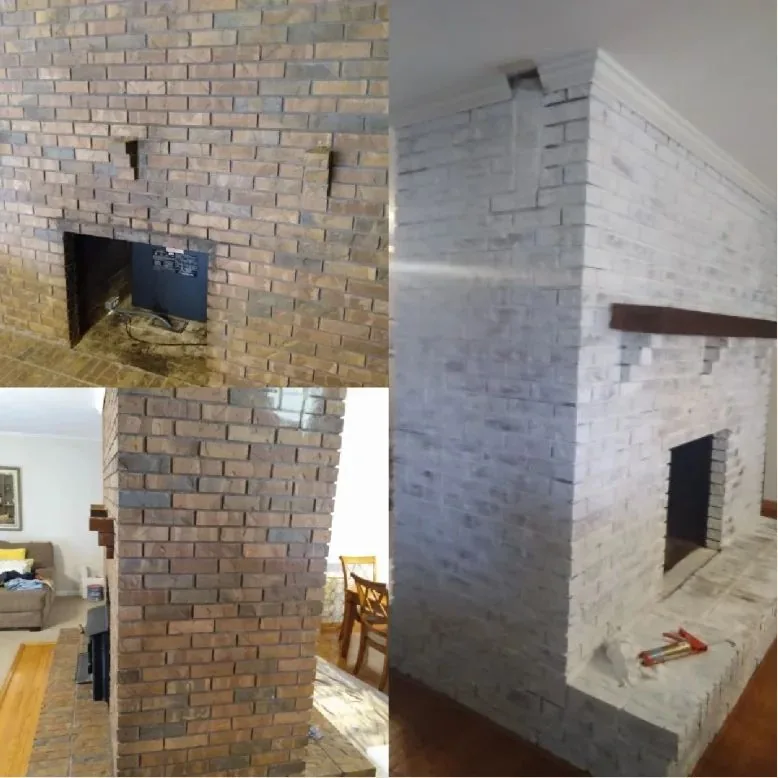
This one is exactly where we want it: soft, irregular, intentional. It looks like the house has always been this color.
When to call us for limewash
If you’ve inherited a red brick exterior you don’t love, want to soften the look without committing to paint, or are renovating a historic property where vapor permeability matters — this is the finish.