Cold-weather exterior work is its own discipline. Paint manufacturers publish minimum application temperatures for a reason — go below them and you risk poor adhesion, slow cure, and surfactant leaching that streaks the finish weeks later.
What made this one tough
We had a narrow warm-weather window and a homeowner who didn’t want to wait until spring. That meant working around overnight lows, ground temperature, and dew point — not just the air temp at the moment we were rolling.
What we did
- Watched the forecast like it was a job — coordinated start times with the warmest part of each day so the surface temp stayed in spec long enough for the coat to set.
- Used a low-temp formulation rated for application down to the upper 30s, so we didn’t fight the chemistry the entire job.
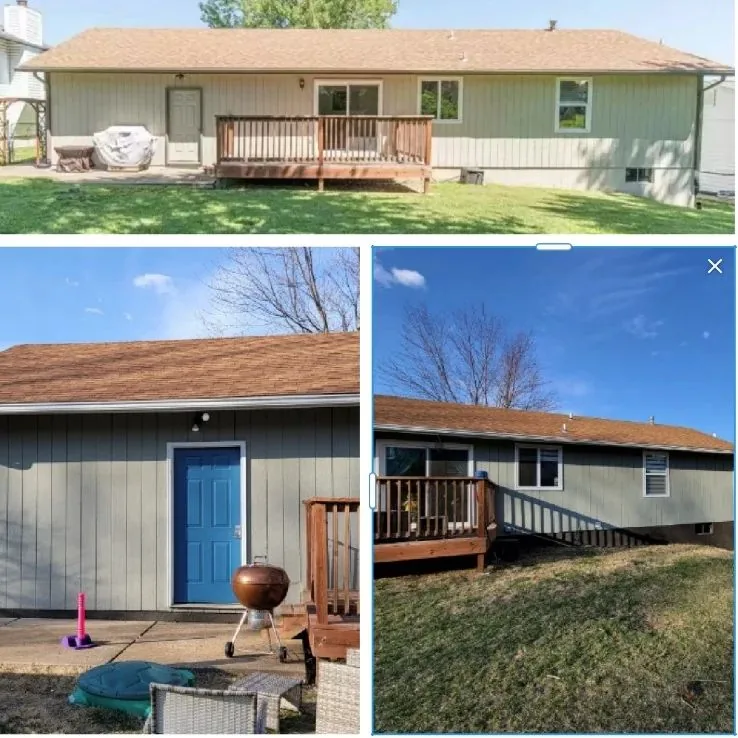
- Trim and body in complementary neutrals — clean, crisp, no fuss.
- Deep blue front door — saturated, semi-gloss, treated as the focal point of the elevation. One bold color in the right place does more for curb appeal than a dozen subtle moves.
What we’d tell a homeowner thinking about cold-weather exterior work
It’s possible. It’s not always smart. The right answer depends on the product, the surface, the orientation of the wall, and how patient you can be with the schedule. We won’t push a cold-weather job onto a homeowner just to keep crews busy — but when it makes sense, we know how to make it last.