Stained wood trim from the 80s and 90s is a polarizing thing. Some homeowners love it as a design feature. Most see it as the single biggest reason their interior reads as dated.
Replacing trim is expensive. Replacing doors is more expensive. Painting them — when it’s done correctly — costs a fraction and changes the feel of every room.
Why “done correctly” matters
Painting over stained wood without proper prep is a guaranteed callback. The stain bleeds through, the paint doesn’t adhere, and you’ve now got a worse-looking surface than you started with. The right process:
- Clean and de-gloss every surface. Stain or polyurethane creates a slick finish that paint won’t grip.
- Stain-blocking primer — usually shellac-based. Same logic as the smoke damage job: stop the underlying material from bleeding through.
- Bright white semi-gloss on trim, doors get the same. The semi-gloss reflects light and reads clean. Flat on trim looks dirty within a year.
- Walls in pure or off-white to let the trim do the work. The contrast is the design.
What this homeowner got
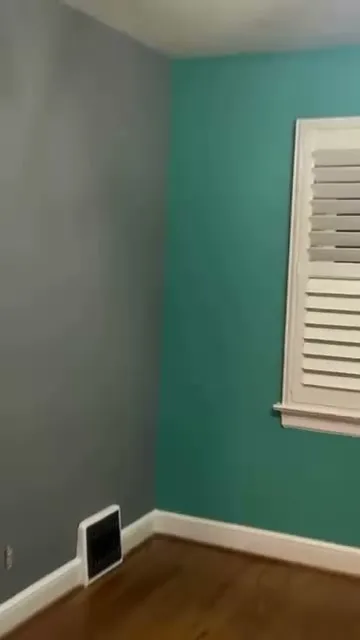
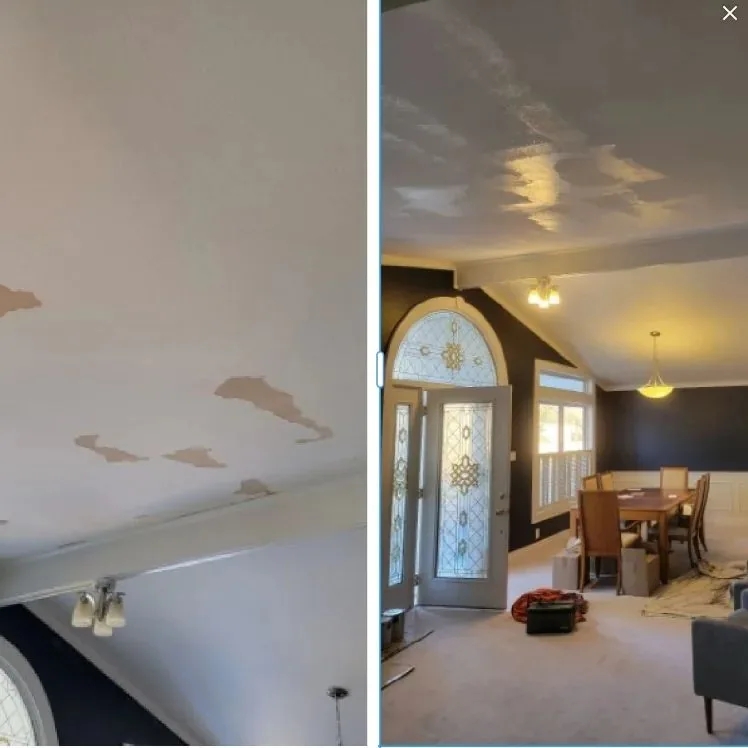
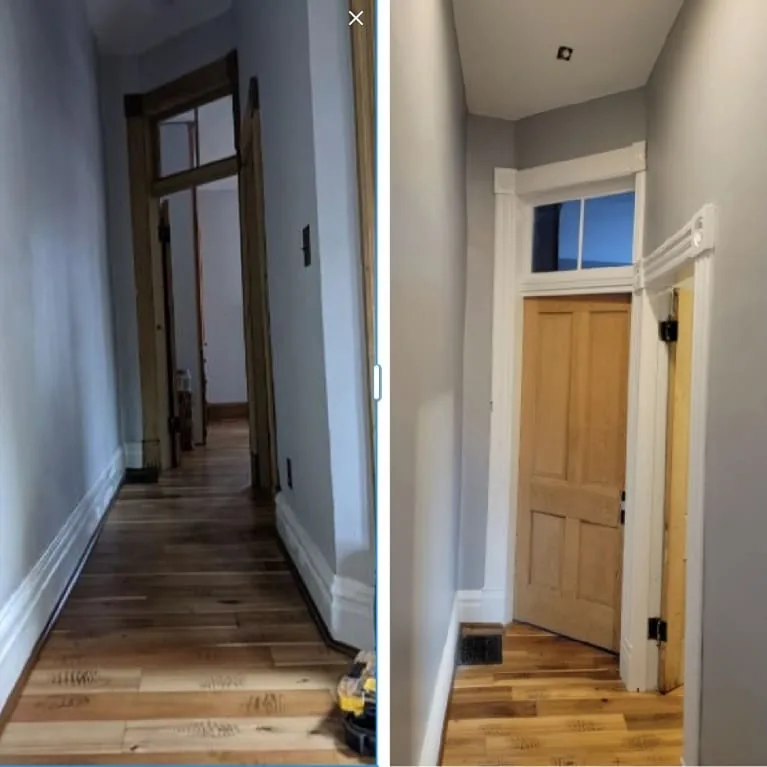
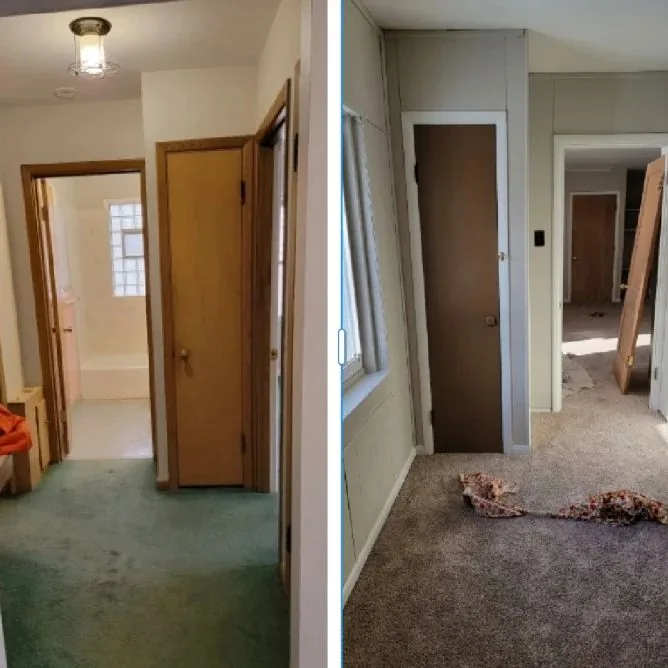
Same doors. Same trim. Completely different room. The cost was a fraction of what custom millwork would have run, and the turnaround was days, not weeks.
If you’re sitting on a house full of stained wood and wondering whether to live with it, replace it, or paint it — the third option is almost always the right call.