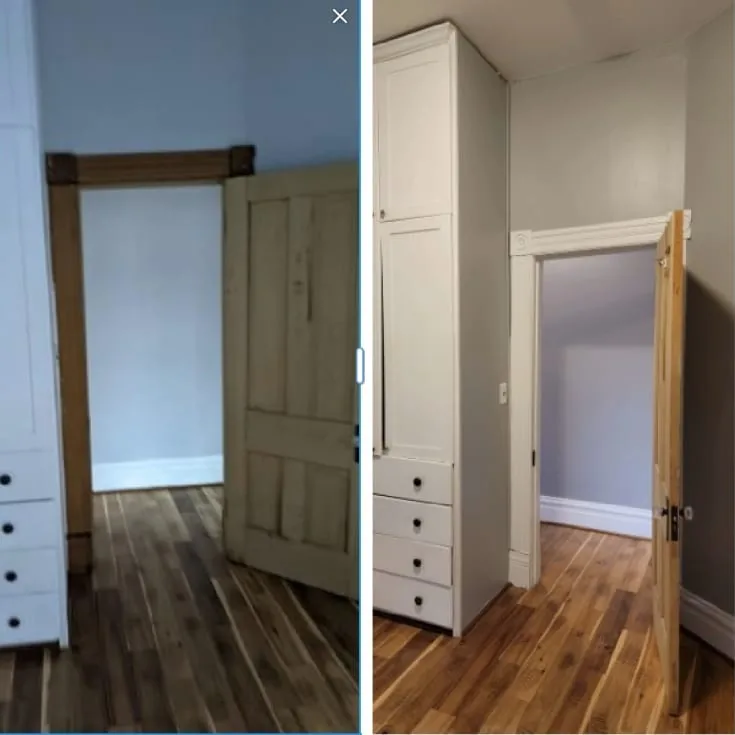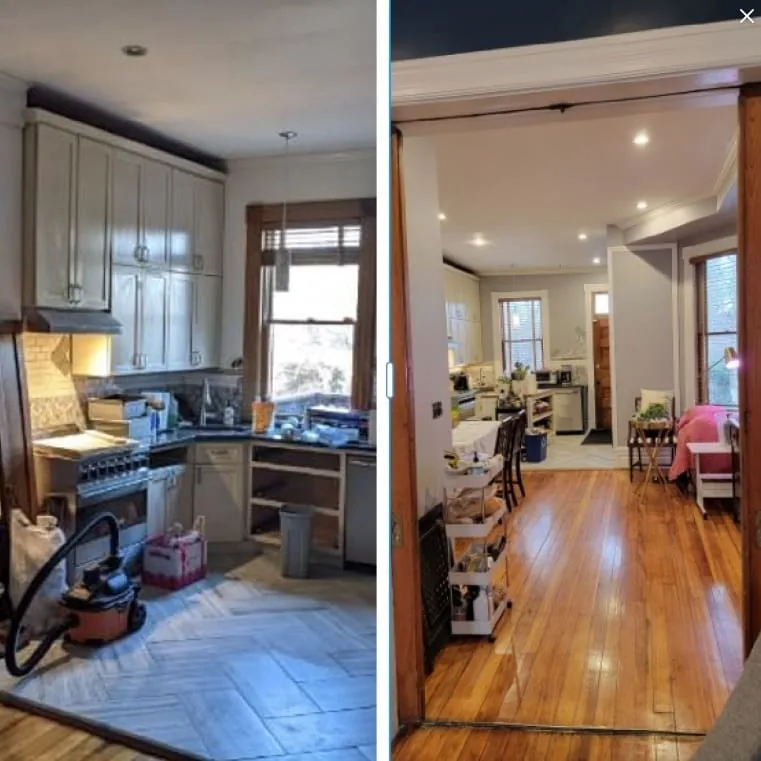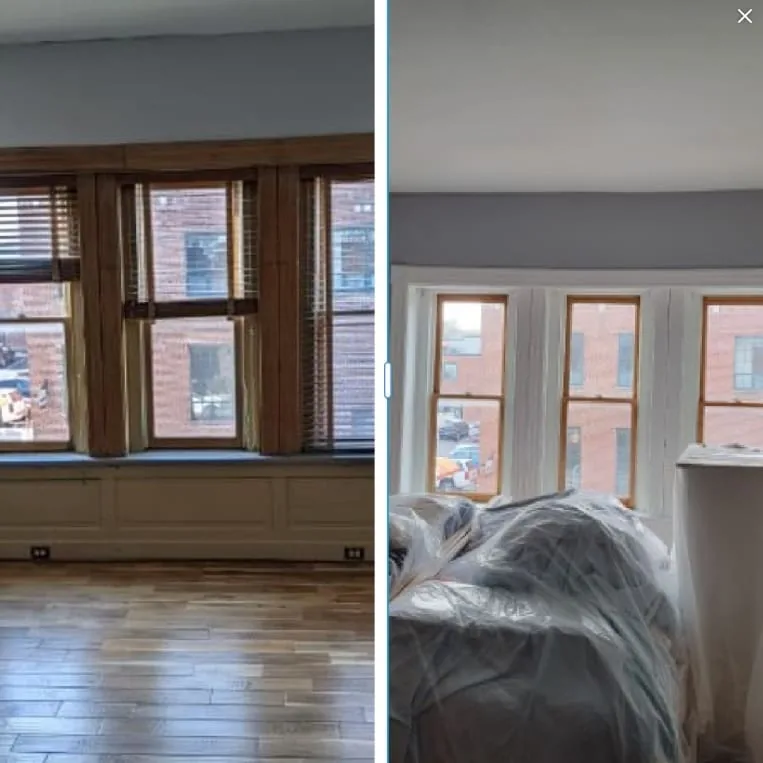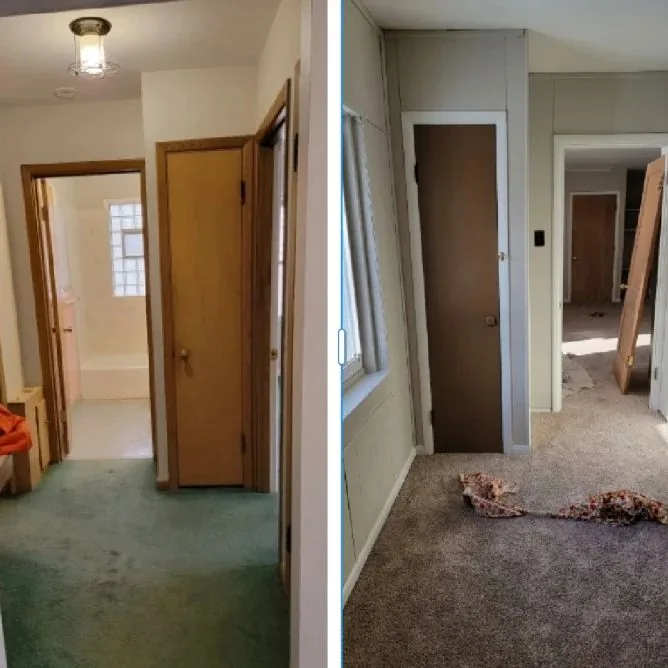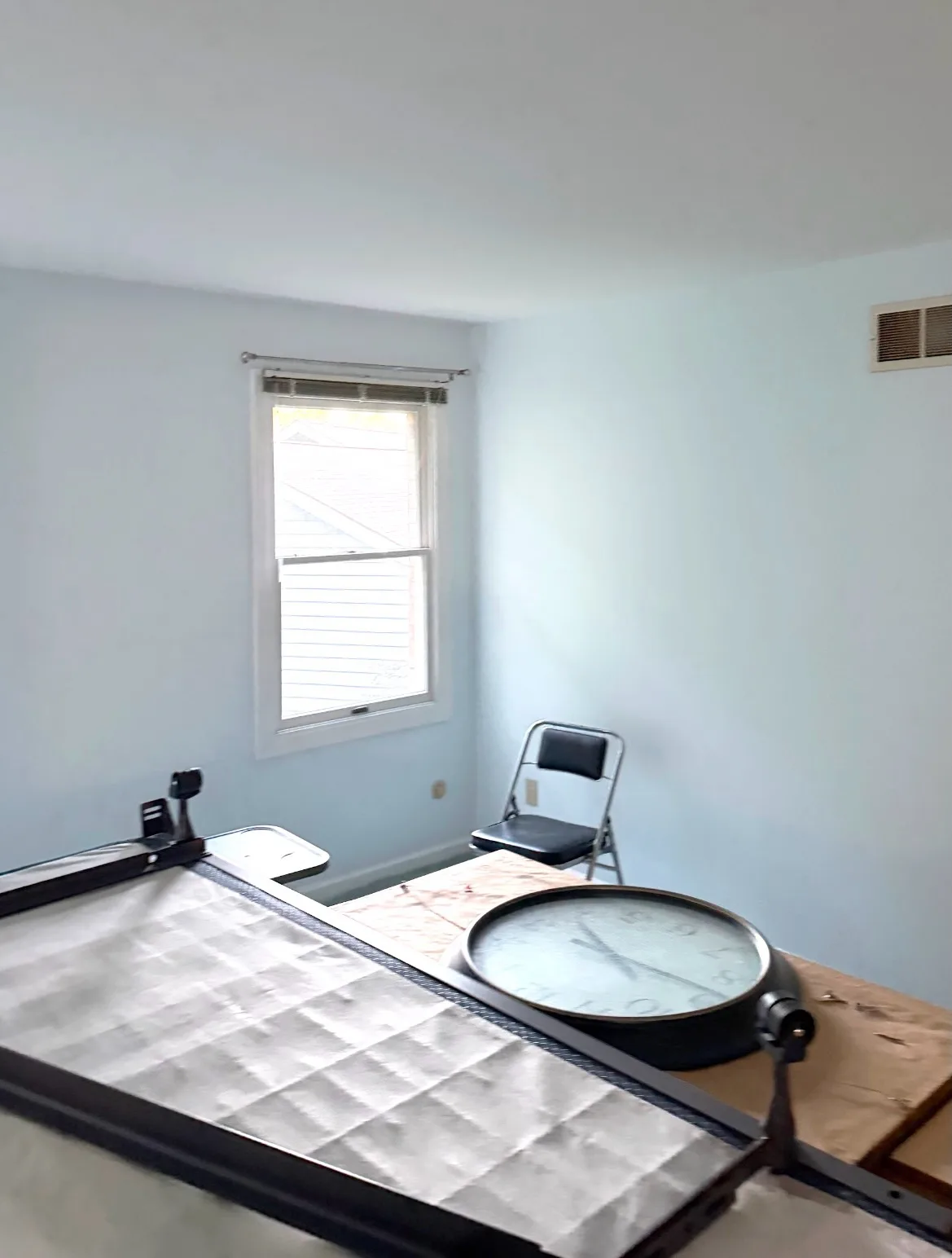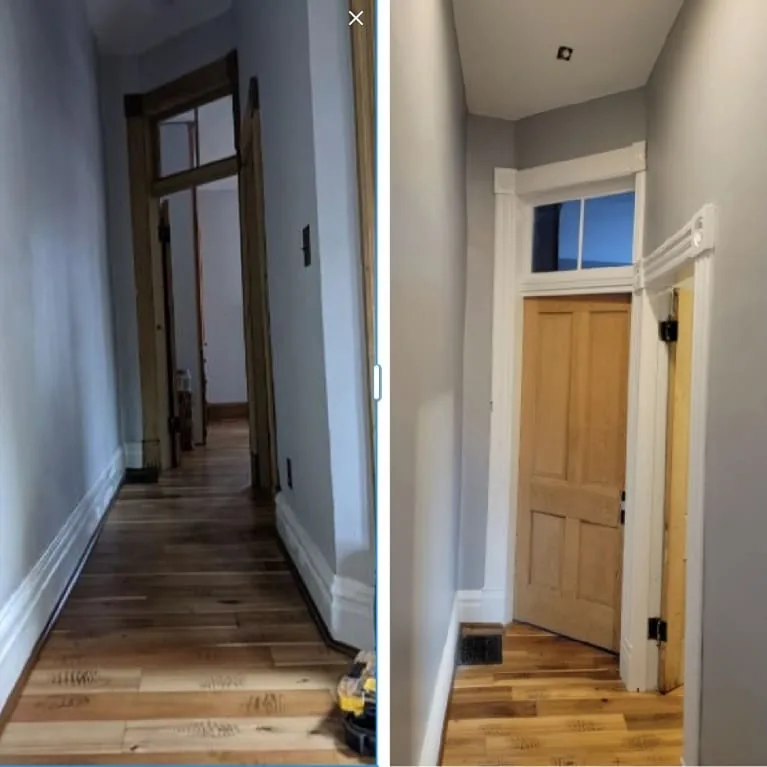
Old houses don’t reward shortcuts. The walls are plaster, not drywall. The trim is real wood, not finger-jointed pine. The previous coats are stacked thirty years deep. And every shortcut you take in prep shows up in the finish coat under raking light.
This one was led by our crew chief Jared, and it’s the kind of project where having a crew chief who actually cares about the finish is the difference between a job that holds up and one that doesn’t.
What “deep prep” means in a historic interior
- Plaster stabilization where there was hairline cracking or hollow sections that needed re-keying.
- Skim coating to flatten walls that decades of paint cycles had left lumpy.
- Trim repair — old wood splits, cracks, and shrinks. We filled, sanded, primed, and re-caulked every joint that had failed before any finish coat went on.
- Sash and door work — operable windows and doors had to keep operating after the paint dried, which meant masking precisely and rolling thin coats rather than burying detail.
- Color matching in spots where the homeowner wanted to keep historical accents — getting close to a 60-year-old custom color is a separate craft.
Why we don’t rush this kind of work
A historic home is a building with character that can’t be replaced. If we skim coat it wrong, scrape it wrong, or paint it wrong, we’ve done damage that costs more to fix than the job was worth. Doing it slowly the first time is the cheapest path.
Jared and the crew brought this one in beautifully. The homeowner wanted attention to detail. They got it.