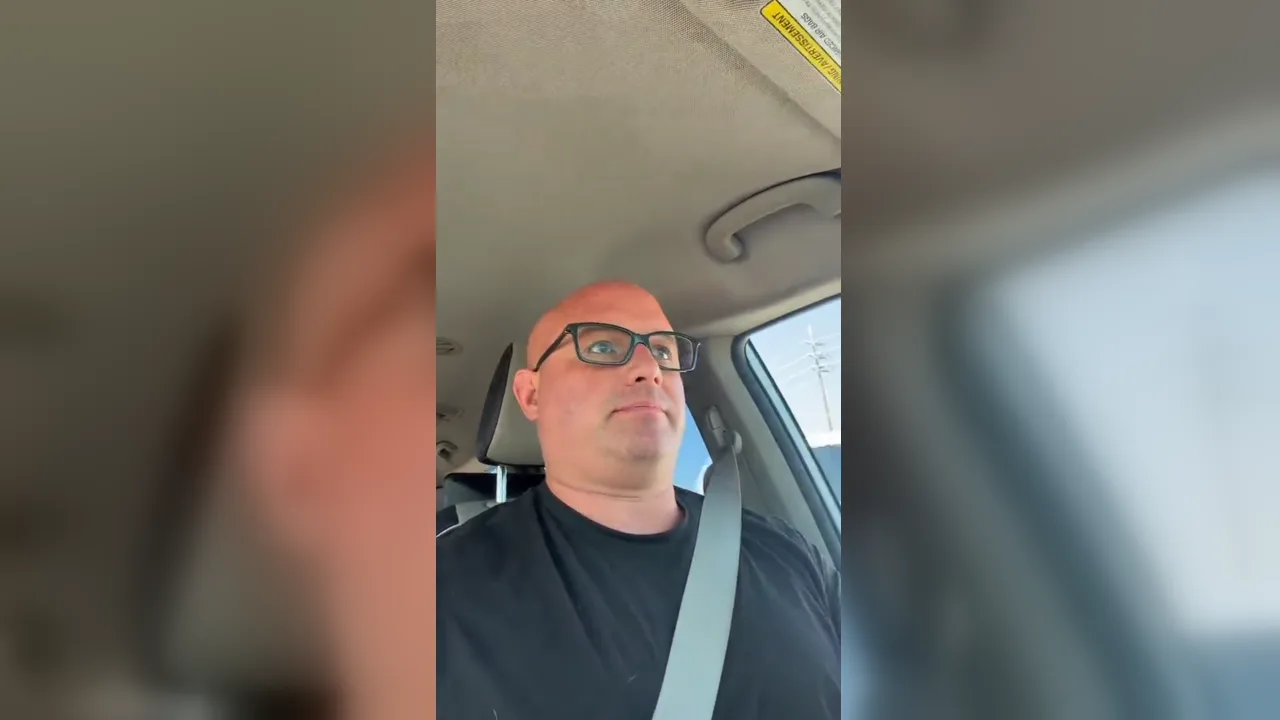
Chris Heerdegen on why almost nobody asks for a COI, and why they should.
Chris Heerdegen owns OnDemand Painters and has been in the trade since 2001. The written breakdown below covers everything in the clip.
Ask Your Painter for a Certificate of Insurance (And Check for Workers’ Comp)
Ask every painting contractor for a current certificate of insurance (COI) before work starts, and check that it lists workers’ compensation, not just general liability. Liability covers damage to your property. Workers’ comp covers the painter who falls off your ladder. Most crews carry the first one. Many do not carry the second.
A customer recently asked Chris Heerdegen, owner of OnDemand Painters, to show his certificate of insurance before booking a job. That request is so rare it was worth making a video about. In 20+ years in the trade, Chris estimates maybe one homeowner in a hundred ever asks.
That is a problem, because painting is one of the trades where nobody is checking on your behalf.
Key Takeaways
- A certificate of insurance (COI) is a one-page document from a contractor’s insurance agent proving active coverage. Any legitimate contractor can produce one within a day.
- Painting generally does not require a trade license, so no state agency verifies a painter’s insurance for you. Nobody checks but you.
- General liability and workers’ compensation are two separate coverages. Most established crews carry liability. Workers’ comp is far less common.
- Workers’ comp is the coverage that matters most to a homeowner, because an injury claim is the one that follows you.
- Your homeowners policy is not designed to absorb a contractor’s on-the-job injury, and coverage for it is typically limited or excluded.
- Asking is easy and normal. A contractor emails their agent and requests a current COI.
Why Painting Is Different From Other Trades
When you hire an electrician or a plumber, a licensing board sits between you and the contractor. To hold the license, they had to submit documentation, and insurance is usually part of that.
Painting typically has no equivalent. As Chris puts it in the video:
“Painting doesn’t require any kind of a license, so you don’t have to submit any official documents to prove you have insurance.”
That means “we’re fully insured” is, in most markets, an unverified claim on a website. It might be completely true. There is just no authority confirming it, which makes the COI the only real evidence.
Liability vs. Workers’ Comp: The Distinction That Matters
These get bundled together in the phrase “licensed and insured,” but they cover two entirely different events.
| Coverage | What it pays for | Typical example |
|---|---|---|
| General liability | Damage the crew causes to your property | Paint spilled on hardwood, a ladder through a window |
| Workers’ compensation | Medical costs and lost wages when a worker is injured on the job | A painter falls from a ladder on your stairwell |
Chris’s read from years of interviewing and hiring crews:
“Probably 90% of crews that I’ve interviewed and met that are full businesses, they have liability insurance. What they do not carry is workers’ compensation.”
So the coverage nearly everyone has is the one covering the smaller problem, and the coverage many skip is the one covering the catastrophic one.
Why Crews Skip Workers’ Comp
Two reasons, per Chris:
- Cash wages. Crews paying workers under the table have no payroll to base a workers’ comp policy on. The insurance and the off-books pay cannot coexist.
- Cost. Workers’ comp for painting is genuinely expensive. Painting classification codes carry high rates because the work involves ladders, scaffolding, roofs, and solvents.
Neither reason helps you if someone gets hurt in your house.
Why Liability Claims Rarely Get Filed Anyway
Here is the part most homeowners never consider. Even when a painter carries liability insurance, they often do not use it:
“Liability’s great, but usually the mistakes are small enough that guys would just pay cash and not put it on their insurance anyways.”
A contractor with a $1,000 deductible and a $400 paint spill on your carpet pays the $400 out of pocket. Filing raises their premium. So the liability policy everyone advertises is, in practice, rarely the thing that resolves ordinary job-site mistakes.
An injury is different. Nobody settles a broken back with cash from the truck.
What Happens if an Uninsured Painter Gets Hurt in Your Home
This is the scenario the COI is really protecting you from. Chris’s warning:
“If a person gets injured in your home, your homeowner’s insurance doesn’t cover that. You could have somebody sprain or break something that takes years to repair, and they might end up owning your house someday.”
The hyperbole is his. The underlying risk is not.
Homeowners policies are written to cover your household, not a contractor’s workforce. Most include a small medical-payments limit for guests, often in the $1,000 to $5,000 range, which does not go far against a serious orthopedic injury. Many policies also exclude injuries to people working on the property for pay. In some states, hiring an uninsured contractor can expose the homeowner to being treated as the responsible employer for that worker.
The exact outcome depends on your policy language and your state’s law. That uncertainty is the point: an uninsured injury on your property puts you somewhere on a spectrum from “inconvenient” to “financially ruinous,” and you do not get to find out where until it happens. A COI takes the question off the table.
If you want to know how your own policy handles it, your insurance agent can tell you in a five-minute phone call. It is worth making.
How to Ask (It Takes One Text Message)
The request should feel routine, because for the contractor it is:
“It’s very easy for somebody to just email their agent and go, ‘Can I get my COI updated?’”
What to send:
“Before we get started, could you send over a current certificate of insurance? Just want to make sure workers’ comp is included.”
Then check four things on the document that comes back:
- The insured’s name matches the business you are hiring. A COI belonging to a general contractor does not cover the subcontractor swinging the brush.
- The policy dates are current. COIs expire. An expired certificate is proof of nothing.
- There is a dollar amount in the workers’ compensation section. This is the box most often blank. If it is empty, they do not have it.
- It came from the agent, not the contractor. Legitimate COIs are issued on the ACORD form by the insurance agency. Ask for it to be emailed directly from the agent if you have any doubt.
You can also request to be listed as a certificate holder, which means the insurer notifies you if the policy lapses. That is standard practice on commercial jobs and entirely reasonable on a residential one.
What a Refusal Tells You
A contractor who has the coverage will send it over without friction. It costs them nothing and it wins them the job.
Pushback, delay, or an offer to “just show you a card” is the answer to your question. So is a certificate with an empty workers’ comp box. Neither is necessarily proof of a bad painter, but both mean the financial risk of an injury sits with you rather than with an insurance company, and you should price that in before signing.
The One-Minute Version
Ask for the COI. Confirm workers’ comp is on it. Confirm the dates are current. That is the whole process, and it puts you in the one-in-a-hundred group that actually checked.
Every OnDemand Painters crew carries both general liability and workers’ compensation, and we will send the certificate before you ask. Request a quote and it comes with the estimate.
Frequently Asked Questions
What is a certificate of insurance?
A certificate of insurance, or COI, is a one-page summary issued by a contractor’s insurance agent showing which policies are active, the coverage limits, and the expiration dates. It is standard paperwork that any insured contractor can request from their agent and receive within a day.
Do painters legally need insurance?
In most areas painting is not a licensed trade, so there is typically no legal requirement for a painter to carry insurance and no agency verifying it. Requirements vary by state and city, and some municipalities require a general business license. Because nobody is checking on your behalf, asking for the certificate yourself is the only reliable verification.
Is general liability insurance enough?
No. General liability covers damage the crew causes to your property, but it does not cover a worker injured on the job. Workers’ compensation is the coverage that handles injuries, and it is the one more likely to be missing.
Will my homeowners insurance cover a painter injured in my house?
Usually not in any meaningful way. Homeowners policies typically include only a small medical-payments limit for guests and commonly exclude injuries to people working on the property for pay. Some states can also treat a homeowner who hires an uninsured contractor as the responsible employer. Ask your own agent how your specific policy handles it.
How do I ask a contractor for their certificate of insurance?
Ask directly, in writing, before work begins: request a current certificate of insurance and confirm that workers’ compensation is included. The contractor emails their insurance agent, who issues the certificate. You can also ask to be named as a certificate holder so you are notified if the policy lapses.
What should I do if a painter will not provide a COI?
Treat it as a decisive answer rather than a paperwork delay. A contractor carrying the coverage has no reason to withhold the certificate. Without it, an injury or damage claim on your property becomes your financial exposure instead of an insurer’s.

Chris Heerdegen
Chris Heerdegen is the founder and owner of OnDemand Painters, a painting and finishing company serving six metro markets across the Midwest and Florida. With over 20 years in the industry since 2001, Chris built OnDemand around a simple idea: answer the phone, show up when you say you will, and do the kind of work that earns a review.
All Posts